01
Piano tuning
When the notes no longer sound quite right. Carefully adjusting string tension brings pitch and harmony back into balance.
For pitch & harmony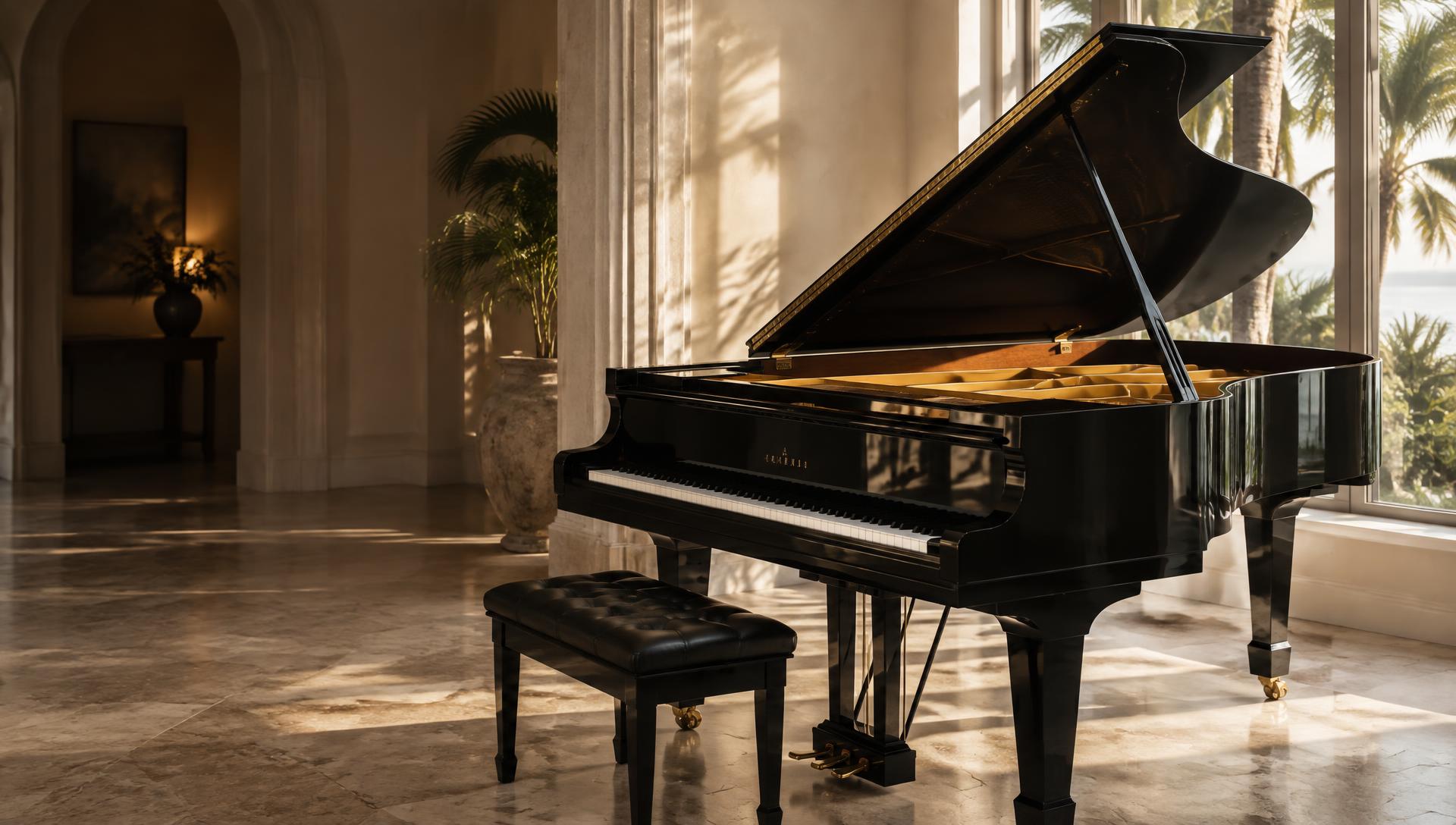
Piano tuning & repair · South Florida
Careful tuning, diagnosis and repair by a factory-trained musician and pianist — in homes, condominiums and institutions from Miami-Dade to Palm Beach.
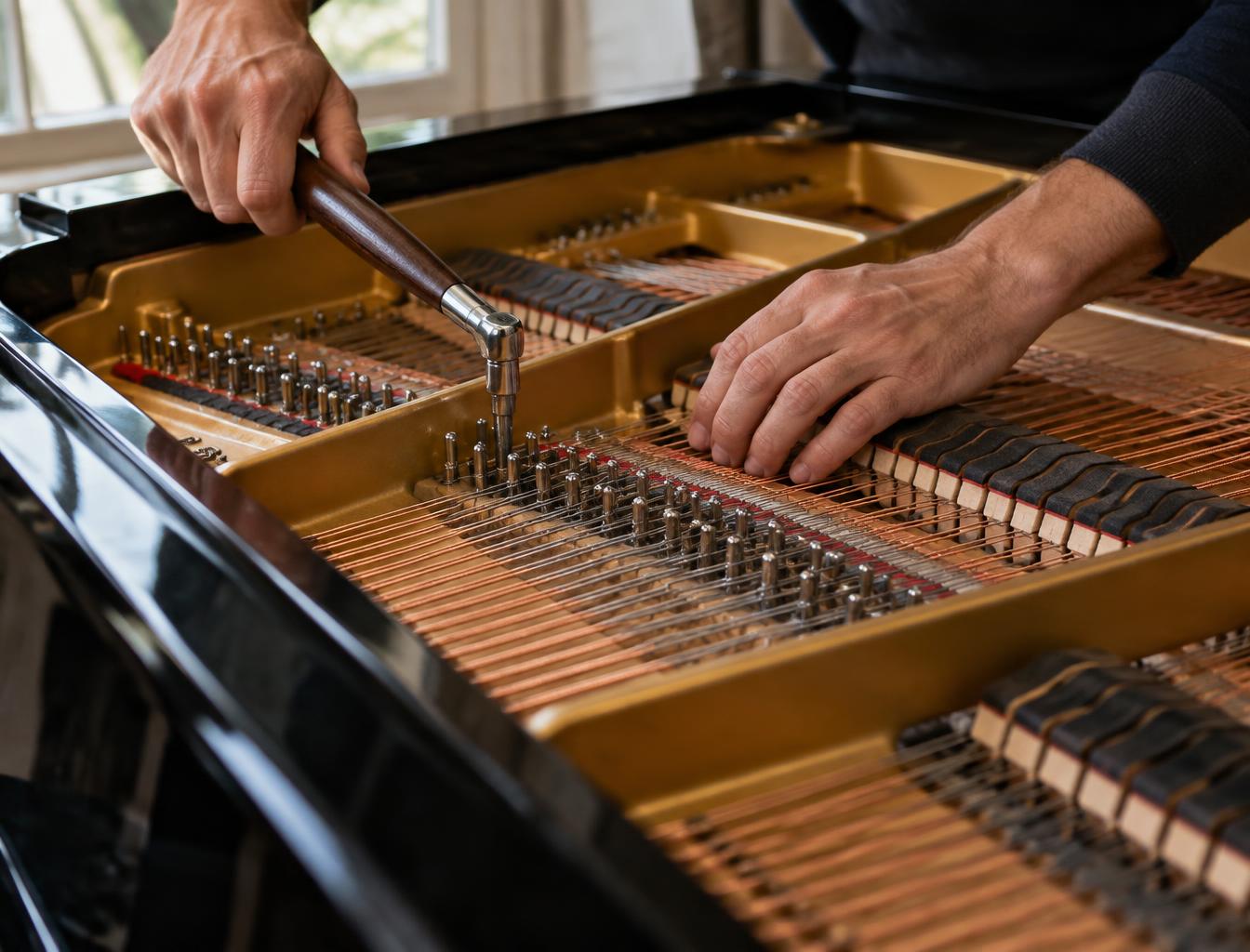
Illustrative piano-care photography
The person behind the piano care
Maestro Piano is built on over 50 years of piano-tuning experience: listening closely, diagnosing carefully, and working hands-on with the intricate world inside a piano.
A highly skilled musician and pianist, your technician brings a trained ear and an understanding of how a piano should feel and sound — not simply how it is assembled. His training took place in Russia at a piano factory specializing in piano construction and tuning, laying the foundation for deep hands-on repair, restoration, and refinishing craft.
The approach combines traditional specialist tools with careful diagnosis and a commitment to the highest standards of tuning and repair. Respect the instrument, explain the proposed work, and assess its condition before recommending what is practical — without promising a particular outcome.
Over 50 years of piano tuning.
An experienced hand. An attentive ear.
Let’s start with what you notice
You don’t need to know the technical name. Tell us what feels different, and we’ll help you understand the next step.
A photo or short video can help tell the story.
A thoughtful approach
Describe the issue, your piano, and your location. Add photos or a short video if you can.
We’ll discuss your inquiry and arrange a suitable in-home or on-site visit. Check appointment hours and prices, or contact us to discuss a visit.
Your piano is inspected, and the findings and proposed work are explained before you decide how to proceed.
Good questions. Clear answers.
Every instrument is different. Here are honest answers to the questions we hear most.
Often it can, but the hammer, the rest of the action and the neighboring parts need to be inspected first. Some problems are a repair or adjustment; others call for replacing a part. Please don’t take the action apart or glue anything yourself — it can cause further damage.
Several things can do this: a small object under the key, swollen wood from humidity, a worn or misaligned part, or a broken component. Don’t force the key or put oil, spray or cleaner into the piano. A short video and an assessment are the best next step.
Age alone does not decide. An inspection comes first; depending on the condition and your goals, the options range from tuning and targeted repair, to cleaning and adjustment, to reconditioning or a full rebuild. Not every piano is worth every option, and you will get an honest view before deciding.
Not necessarily. A crack, a loose part or a harsh tone can have very different causes and very different importance. Only an inspection of the instrument can show what it means and what is practical.
Tuning adjusts string tension so the notes are in pitch with each other. Repair fixes broken or worn parts. Regulation adjusts the thousands of small action settings that shape touch and response. Voicing works on the hammers to refine the character of the tone.
Many pianos in regular home use benefit from tuning about once or twice a year; heavy use or changing conditions may need more. After many years, the pitch has usually dropped, and bringing it back can take more than one visit to become stable.
Humidity changes are one of the main reasons pianos drift out of tune. A steady indoor climate helps a great deal: keep the piano away from windows, doors, air-conditioning vents and direct sun. Stability varies by instrument and room, so no exact result can be promised.
Yes. An inspection helps you understand a piano’s condition and what work it may need before you commit to buying it or to restoration.
Make and model if you know them, grand or upright, the city, when it was last tuned, and what you notice. A few photos and a short video of the problem keys are very helpful, though they don’t replace an inspection.
Acoustic grand and upright pianos from major makers, each assessed individually. Digital and electronic pianos are not serviced. Maestro Piano is independent and not affiliated with any manufacturer.
Yes. Parts, repairs, regulation beyond the included tuning, refinishing and restoration are quoted separately after inspection, and no additional work is done or charged without your approval.
You can choose an open time on the booking page; it reserves a 2-hour block on our calendar, with payment arranged separately for now. The question form and WhatsApp are not bookings — we reply to arrange a time and confirm coverage for your city.
Our answers are written independently, using these technical references. Listing them implies no endorsement or affiliation.
There may be more life in your piano
A stuck key. An unfamiliar sound. A piano that hasn’t been played in years. What feels like the end of an instrument can often be the beginning of its next chapter.
Many problems are repairable. An honest, professional inspection is the first step toward understanding what your piano needs — and what is worth doing.
Care for the whole instrument
From a routine tuning to a more involved repair,
highest-standard care starts with a trained ear and careful diagnosis.
When the notes no longer sound quite right. Carefully adjusting string tension brings pitch and harmony back into balance.
For pitch & harmonySilent notes, sticking keys, or broken hammers need more than tuning. Find and address the mechanical cause.
For keys that won’t cooperateAn uneven touch or harsh tone can take the joy out of playing. Refine the action’s response and the character of the sound.
For touch & expressionThoughtful work for a well-loved instrument. Explore options for worn finishes and aging components after inspection.
For a new chapterUnderstand the condition of a piano you own or are considering. A hands-on assessment puts the possibilities in perspective.
For informed decisionsKeep your instrument ready for the next piece. Practical care and maintenance tailored to its condition, setting, and use.
For the years aheadAcoustic piano care
We service major makes of acoustic grand and upright pianos.
Condition and repair scope are assessed individually.





Maker names and logos are the trademarks of their respective owners. Maestro Piano is an independent service provider, with no manufacturer affiliation, authorization, endorsement or partnership.
Unmodified manufacturer marks from Wikimedia Commons: Steinway & Sons (public domain in the US); Yamaha, Fazioli and Grotrian-Steinweg (public-domain text logos). Kawai logo by Eurotuber, unchanged, CC BY-SA 3.0. Other makers remain names until suitable original assets are verified.
Music. Mechanism. South Florida.
A moving portrait of the instrument and its setting. Licensed third-party footage, credited to its creators — not Maestro Piano’s technician, projects, or clients. These stock clips have no audio track.
Music · Stock footage
A grand-piano performance, seen close to the keyboard.
Ron Lach / PexelsMusic · Stock footage
An upright in use, with its vertical action visible.
Pavel Danilyuk / PexelsInside the piano · Stock footage
A close look at a grand’s tuning pins and action; not a tuning demonstration.
RDNE Stock project / PexelsInside the piano · Stock footage
Hammers and strings working together; not a repair demonstration.
Ivan S / PexelsSouth Florida · Stock footage
Coastal atmosphere from Miami Beach.
Anatolii Grytsenko / PexelsSouth Florida · Stock footage
Beachfront architecture and the South Florida shoreline.
paashuu / PexelsOur repair videos coming soon
Close-up tuning with a lever and mutes, and key, hammer and action repairs: owner footage will show the actual tools and process. The stock mechanism clips above are not repair instruction or examples of our work.
Footage used under the Pexels License. No creator or performer endorsement is implied.
Music at home. Craft up close.
AI-generated visualization · Miami-inspired apartment
An imagined apartment performance, not a real residence, client or Maestro Piano pianist. Piano audio is part of the generated scene.
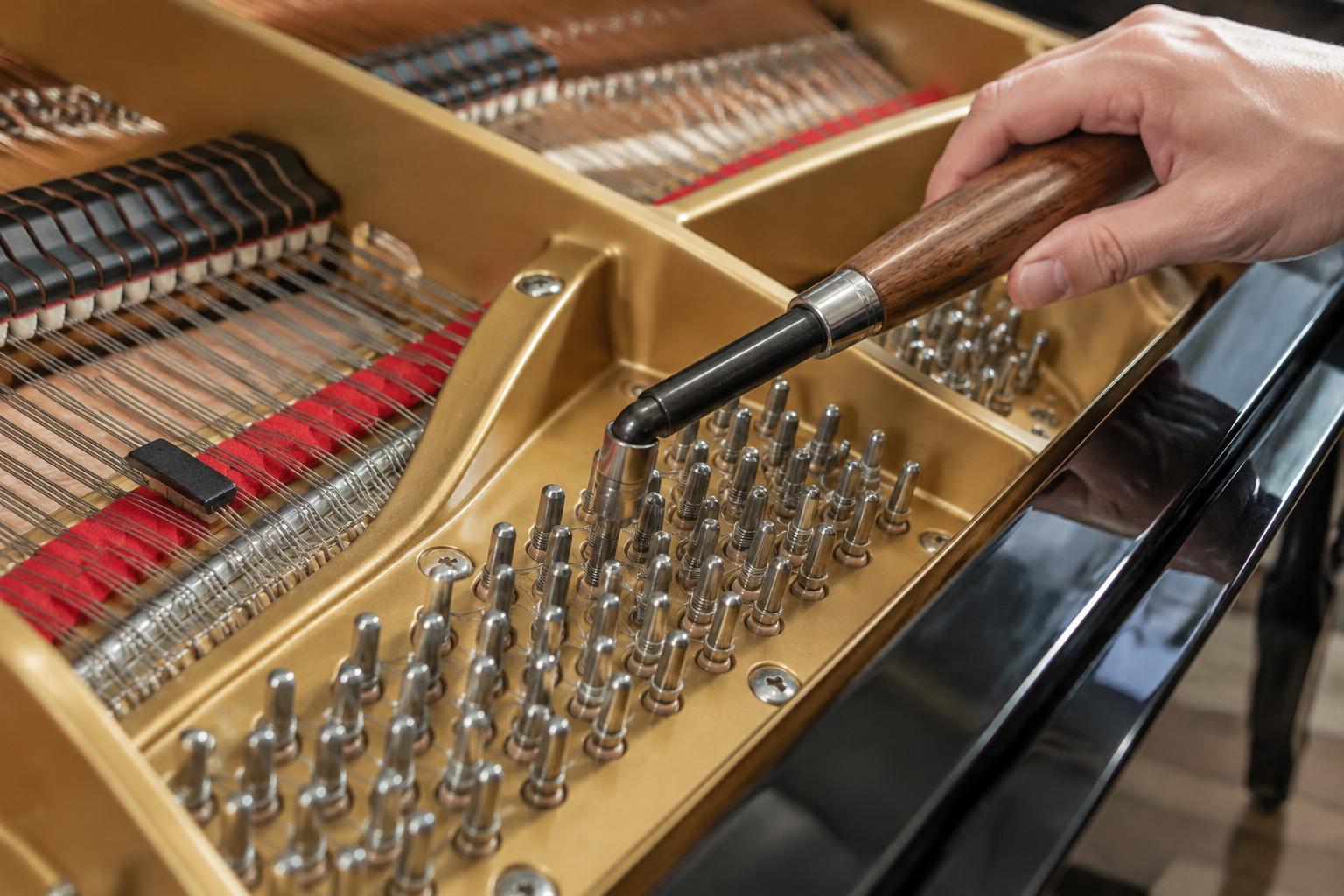
AI-generated educational illustration
A tuning lever adjusts string tension; mutes isolate strings for listening. Accurate tuning depends on a trained ear and careful checks.
AI-generated moving illustration · Not repair instruction
An illustrative action adjustment. Real repair begins with diagnosis; the part, method and scope depend on the instrument.
These generated scenes illustrate general piano care, not the technician’s hands, equipment, workshop or completed work. They are not a do-it-yourself guide.
Understand the instrument
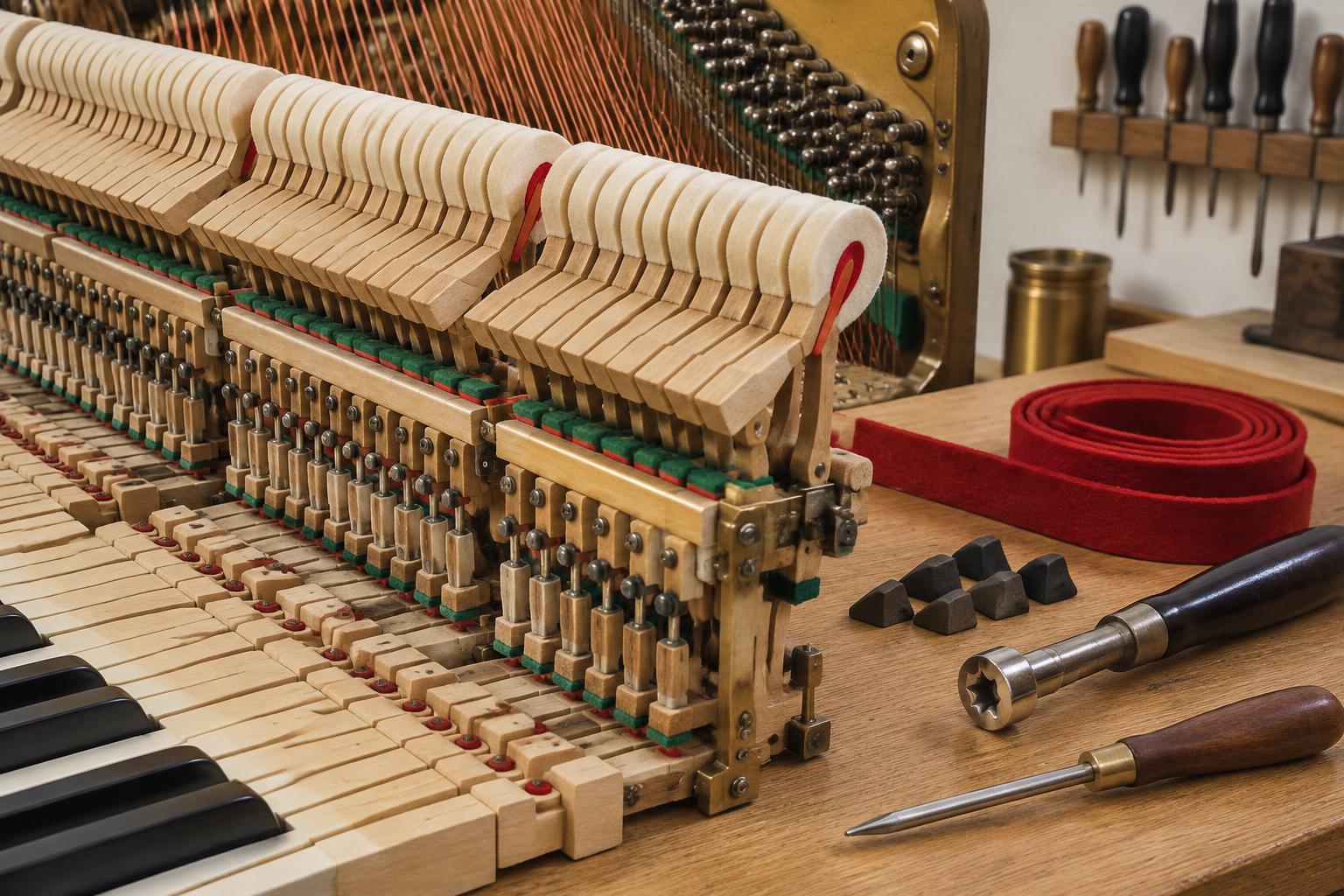
AI-generated educational illustration; not the technician’s equipment or work. Parts vary by instrument.
Strings and soundboard lie horizontally. Hammers strike upward and return largely with gravity; the grand action is designed for controlled repetition.
Strings and soundboard stand vertically. Hammers move toward the strings; springs and the action’s design help return the mechanism. Its compact shape does not mean it needs less care.
Fits the tuning pin so the technician can carefully adjust string tension and pitch. It is not a tool for tightening every pin indiscriminately.
Rubber wedges or felt mutes silence selected strings, allowing one string to be heard clearly while it is tuned.
A long felt strip mutes outer strings across a group of notes so the technician can work on intervals and balance pitch.
Specialised screwdrivers and adjustment tools help set key travel and action relationships for a more consistent response.
Keys, hammers, shanks, springs, and other moving parts turn a finger’s movement into sound. Worn or broken parts may need repair or replacement.
A general guide to piano-care tools and processes, not an inventory of tools owned by your technician.
Tuning adjusts string tension. It does not mend a broken hammer or release a binding key. Repair addresses the cause of a mechanical problem; regulation balances touch and movement, while voicing refines the tone of the hammers.
Many issues can be repaired after inspection. Not every piano is a practical restoration candidate; condition, scope, and your goals guide the recommendation.
Request an assessmentYour piano’s next chapter starts here
Whether something has suddenly stopped working or your piano simply needs attention, tell us a little about it. We’ll start with an assessment, not assumptions.
Personal piano care for residential owners, schools, places of worship, and other institutions. Share your city so service availability can be confirmed.
House, apartment and condominium visits.
Coverage and scheduling are confirmed individually.
Write to us in any language.